



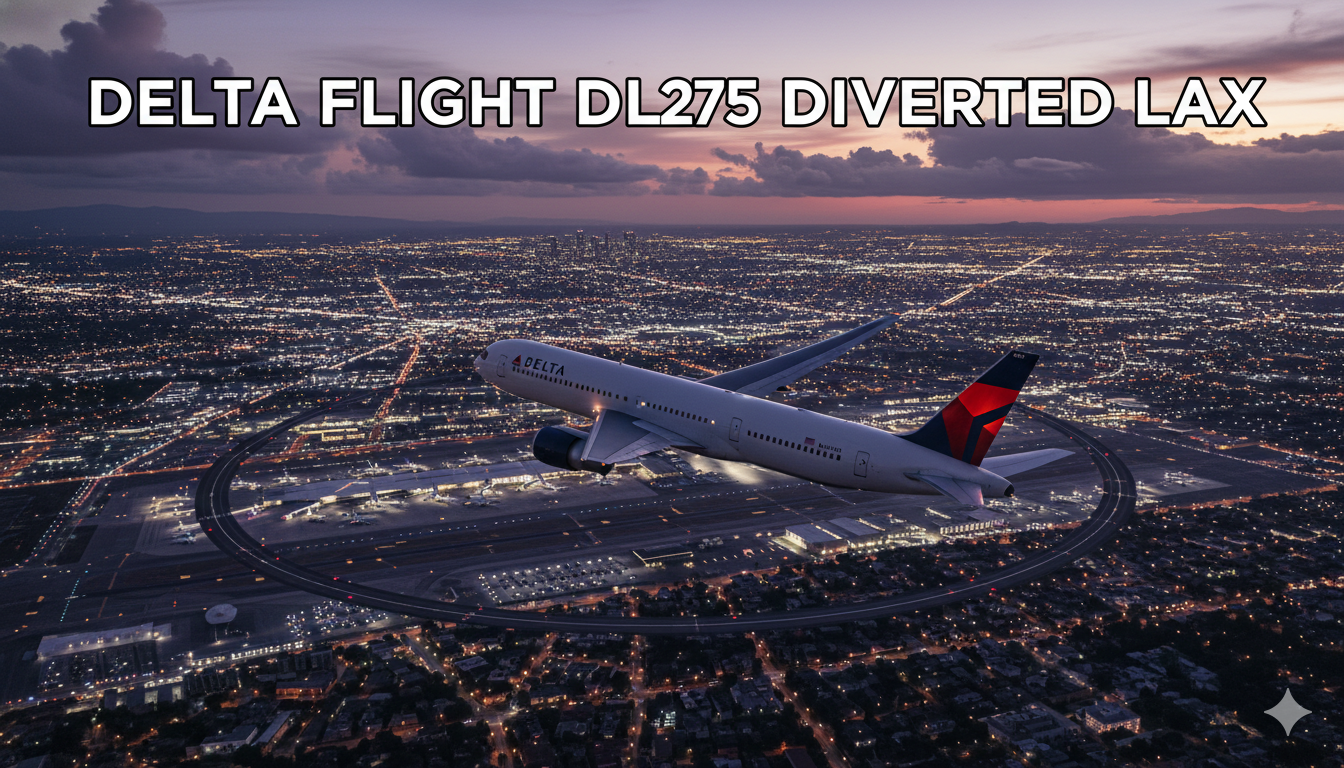
Have you ever been on a plane and felt like you were going in circles? For passengers on Delta Flight DL275 Diverted to LAX, that feeling became a reality. On May 26, 2025, a massive Airbus A350 took off for a 13-hour trip to Japan but ended up in California instead. It is a story that shows just how much work goes into keeping us safe in the sky. Imagine flying for 12 hours only to land a few states away from where you started!
The decision to turn a plane around is never easy for a pilot. It involves checking fuel, weather, and safety tools. In this case, a technical glitch forced the crew to make a tough choice. While it was a long day for the travelers, the story of why Delta flight DL275 diverted LAX is actually a great example of safety coming first. Let’s dive into the details of this unusual flight and what really happened in the cockpit.
Key Details of Delta Flight DL275
| Category | Details |
| Flight Number | DL275 (DAL275) |
| Aircraft Model | Airbus A350-900 |
| Registration | N508DN |
| Engine Type | Rolls-Royce Trent XWB |
| Original Route | Detroit (DTW) to Tokyo Haneda (HND) |
| Diversion Point | Over the Bering Sea / North Pacific |
| Final Landing | Los Angeles International (LAX) |
| Total Flight Time | Approximately 12 Hours and 15 Minutes |
| Reason for Diversion | Engine Anti-Ice System Malfunction |
| Safety Status | All passengers landed safely |
Why Was Delta Flight DL275 Diverted to LAX?
The main reason Delta flight DL275 diverted LAX was a problem with the engine’s anti-ice system. This system is very important when flying over cold areas like the North Pacific Ocean. It uses hot air to keep ice from building up on the engine parts. If ice grows too thick, it can damage the engine or cause it to stop working. The pilots noticed a warning and knew they could not continue to Japan safely.
Even though they were closer to Alaska, the crew chose to fly all the way to Los Angeles. This might seem strange, but it was a smart move. LAX is a huge hub for Delta with better repair shops. Also, the weather in Southern California was warm and dry. This meant they didn’t need the anti-ice system to work perfectly while landing. Safety is always the top priority for every airline.
The Long Path Over the North Pacific
When Delta flight DL275 diverted LAX, it was already deep into its journey. The plane was flying over the Bering Sea, near the edge of Russia and Alaska. This area is known for its freezing temperatures and remote location. At 38,000 feet, the air is incredibly cold. The crew had to decide where to go once the anti-ice system showed a failure.
Instead of landing at a small airport in Alaska, they turned southeast. They flew for another five hours to reach Los Angeles. By the time they landed, the plane had been in the air for over 12 hours. That is almost as long as the entire flight to Tokyo would have taken! Passengers basically took a “flight to nowhere,” but they arrived on the ground without any injuries.
Understanding the Engine Anti-Ice Issue
The Rolls-Royce engines on the Airbus A350 are some of the most advanced in the world. They use “bleed air” from the engine to heat up the front parts. This stops ice from forming when the plane flies through clouds or freezing rain. During the Delta flight DL275 diverted LAX incident, this specific part of the engine stopped working correctly.
Without a working heater, the engine is at risk. If ice chunks break off and fly into the engine, it can cause a “flameout” or internal damage. Pilots are trained to never take that risk over the ocean. By diverting to LAX, they ensured the aircraft stayed in clear, warm air where ice wasn’t a threat. It was a textbook example of careful flying.
Why Choose LAX Over Other Airports?
You might wonder why they didn’t just land in Anchorage or Seattle. When Delta flight DL275 diverted LAX, the airline had to think about more than just the landing. They had to think about the people and the plane. LAX has special mechanics who know how to fix the Airbus A350. Smaller airports might not have the right tools or parts.
Also, Delta has many more flights leaving from LAX. This makes it easier to find new seats for hundreds of frustrated passengers. If they landed in a remote spot, people might have been stuck for days. By choosing a major city, Delta could give people hotel rooms and better food while they waited for a new flight.
Life Inside the Cabin During a Diversion
Being a passenger on Delta flight DL275 diverted LAX was likely a very tiring experience. Imagine watching the flight map and seeing the little plane icon turn around. The pilots usually talk to the passengers over the speakers to explain what is happening. They try to keep everyone calm by being honest about the technical issue.
Most people feel a mix of boredom and worry during these times. Since the flight was so long, the crew had to keep serving meals and water. Once they landed at LAX at 1:00 AM, the real challenge began. The passengers had to get off the plane, find their bags, and figure out how to get to Japan. It was a very long night for everyone on board.
How Delta Handled the Travelers
After Delta flight DL275 diverted LAX, the airline’s ground team went into high gear. Their job was to take care of nearly 300 people in the middle of the night. Delta typically provides meal vouchers and hotel stays when a flight is diverted for a mechanical reason. This helps make a bad situation a little bit better for the customers.
Because there weren’t many open seats to Tokyo the next day, some people had to fly back to Detroit first. Others waited at LAX for the next available plane. It was a logistical puzzle. Delta’s goal is always to get people to their destination as fast as possible, even if the path is a bit “bumpy” along the way.
The Cost of a Major Flight Diversion
A diversion like Delta flight DL275 diverted LAX is very expensive for an airline. Experts estimate it can cost over $2 million. This includes the extra fuel used to fly five hours to California. It also includes landing fees at LAX, which are not cheap. The airline also has to pay for the hotels, food, and new tickets for all the passengers.
Then, there is the cost of fixing the plane. The engine needed a full inspection and a new anti-ice valve. Taking a big plane like the A350 out of service for even one day costs a lot of money in lost revenue. However, these costs are nothing compared to the importance of passenger safety. Delta would rather spend millions than risk a single life.
Modern Tech and Predictive Maintenance
One interesting part of the Delta flight DL275 diverted LAX story is how planes “talk” to the ground. Modern jets send data to engineers while they are still in the air. This is called predictive maintenance. Computers can sometimes see a part failing before the pilot even gets a warning.
In the future, AI might help prevent these diversions entirely. If a sensor shows a valve is getting sticky, the airline can fix it before the plane ever leaves the gate. This incident reminds us that while technology is great, we still need skilled pilots to handle things when the machines have a bad day.
Tips for Passengers During a Diversion
If you ever find yourself on a flight like Delta flight DL275 diverted LAX, the best thing to do is stay calm. The flight attendants are there to help you. Listen closely to their instructions. It is also a good idea to have a “travel kit” in your carry-on bag. This should include a charger, some snacks, and any medicine you might need.
Keep your phone charged so you can check the Delta app for updates. The app often shows your new flight info before the gate agents even have it. Remember, a diversion is for your safety. It might be a huge delay, but arriving safely is the most important part of any trip.
Final Thoughts on the DL275 Incident
The story of Delta flight DL275 diverted LAX is a reminder of the complexity of global travel. We often take for granted that we can fly across the world in a few hours. When things go wrong, we see the incredible systems that keep us safe. From the pilots’ quick thinking to the mechanics waiting at LAX, a whole team was working to protect the passengers.
Even though it resulted in a 12-hour flight to nowhere, the diversion was a success. The plane landed safely, the issue was identified, and no one was hurt. Next time you board a flight, you can feel confident knowing that airlines like Delta have strict rules to keep you safe, no matter where you are in the sky.
Frequently Asked Questions (FAQs)
1. Why was Delta flight DL275 diverted LAX?
The flight was diverted because the engine’s anti-ice system failed. This system is needed to prevent ice from forming on the engine when flying in cold, high-altitude conditions.
2. Where was the plane when it turned around?
The Airbus A350 was flying over the Bering Sea, which is between Alaska and Russia, when the crew decided to head toward Los Angeles.
3. Was anyone hurt during the DL275 diversion?
No, everyone on board landed safely. The diversion was a “precautionary” measure, meaning the pilots acted early to prevent an emergency.
4. How long did the diverted flight stay in the air?
The plane was in the air for over 12 hours. It traveled from Detroit toward the Pacific and then back down to Southern California.
5. Why didn’t they land in Alaska instead of LAX?
Delta chose LAX because it is a major hub. It has the specific tools needed to fix an Airbus A350 and more flights available to help passengers reach their destination.
6. What happened to the passengers after landing?
Passengers were given assistance by Delta’s ground team. Many were put on new flights or given hotels and meals until they could continue their journey to Tokyo.
Conclusion
The Delta flight DL275 diverted LAX event was a long and tiring day for many, but it proves that safety is the top priority for modern airlines. By choosing to divert, the pilots ensured that a minor technical issue didn’t turn into a major problem over the ocean. If you have ever experienced a flight delay or diversion, you know how stressful it can be. However, knowing the “why” behind the decision can help us appreciate the care that goes into every flight.
Do you have a story about a flight diversion? Or perhaps you have questions about how engine systems work? Feel free to share your thoughts and stay tuned for more travel updates!
