



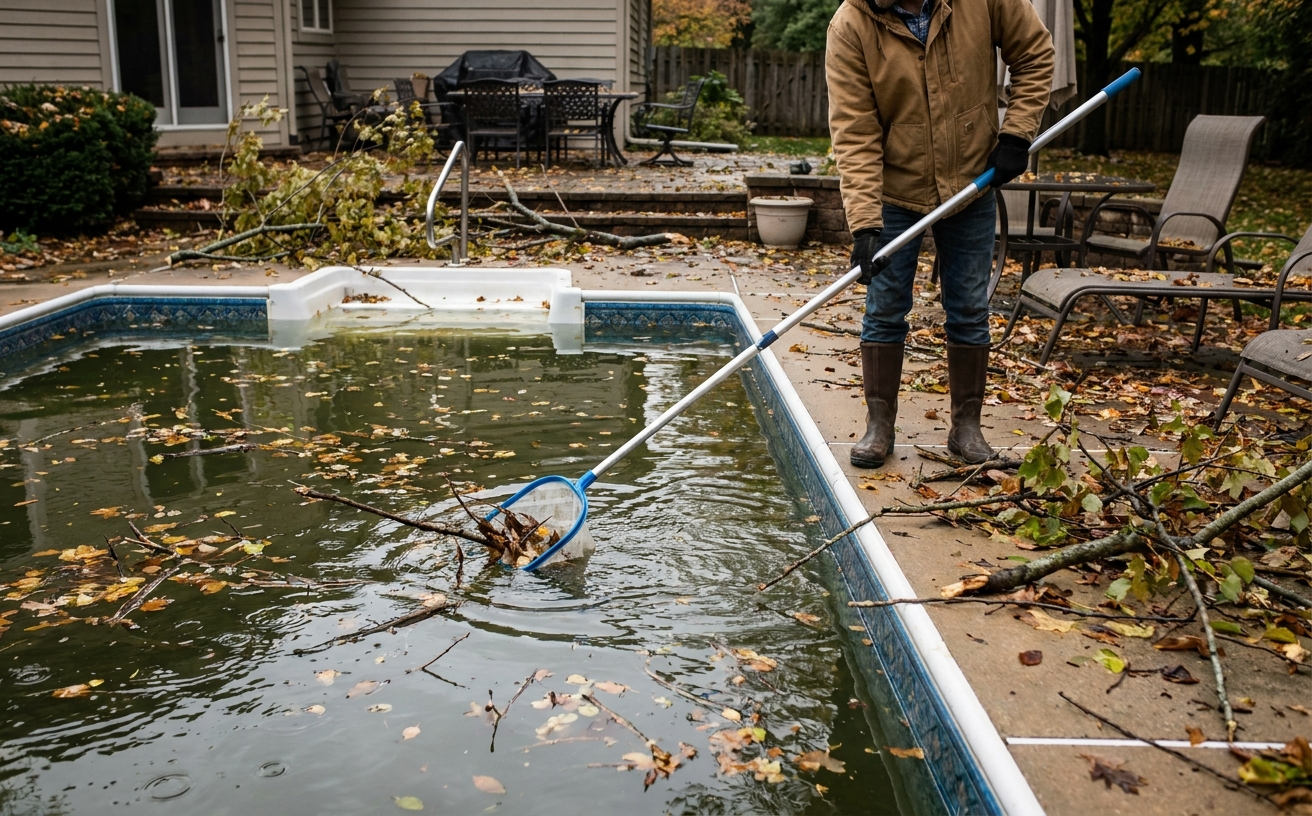
A heavy thunderstorm blows through. The rain stops, the sun comes out, and you walk out to check the pool. The water is no longer clear. Leaves and dirt are scattered everywhere. The chemical balance you had dialed in is gone.
This is a common situation for pool owners in almost any region with summer storms. The good news is that recovery is usually straightforward. The steps below cover what to check first, how to handle the most common issues, and when things are likely to return to normal.
What Usually Happens to Pool Water During a Storm
Storms affect pools in several ways at once. Rain itself dilutes the water, which lowers the sanitizer level and shifts the pH. Wind blows in debris. Lightning can knock out power to the pump. Each of these factors has a different impact.
Dilution and Chemical Shifts
A heavy downpour can add several inches of fresh water to the pool. This dilutes the chlorine, pH buffer, and stabilizer levels. The result is water that is less protected against algae and bacteria.
Testing the water after a storm is the most reliable way to know what needs to be adjusted. In many cases, adding a small amount of sanitizer and adjusting the pH is all that is needed.
Debris and Organic Load
Wind carries leaves, grass clippings, pollen, and dirt into the pool. These materials start breaking down immediately, consuming chlorine and providing nutrients for algae. The faster the debris is removed, the less impact it has on water quality.
Skimming the surface and vacuuming the floor as soon as possible after the storm helps the filter handle the increased load.
Equipment Interruptions
If the power went out during the storm, the pump and filter may have been off for several hours. Stagnant water in the lines and filter is never ideal, but a few hours without circulation is usually not a problem as long as the water was balanced before the storm.
Step-by-Step Recovery Process
The order of operations matters. Doing things in the wrong sequence can make the process take longer than necessary.
Step 1: Remove Visible Debris
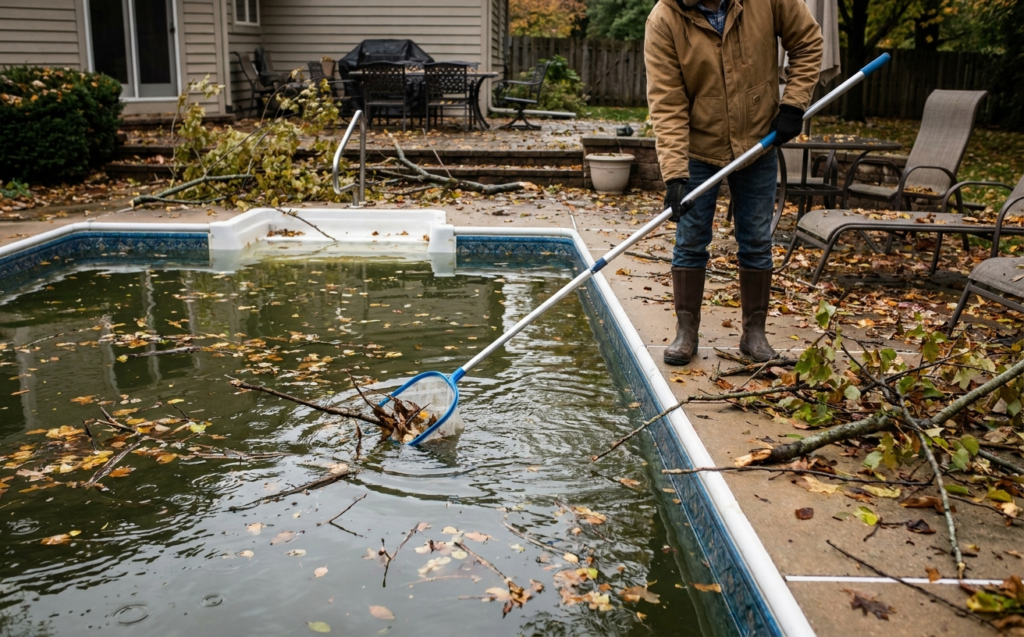
Start with the surface. Use a skimmer net to remove leaves, twigs, and any large floating debris. Then check the skimmer basket and pump strainer basket. They may be full after a storm.
Once the surface is clear, vacuum the pool floor. If there is a heavy layer of sediment, vacuuming to waste instead of through the filter can prevent the filter from clogging too quickly.
Step 2: Check and Restart Equipment
If the pump was off during the storm, check that the breaker has not tripped and that the pump basket has water in it before restarting. Dry-running a pump can damage the seal.
Check the pressure gauge on the filter. If it is higher than normal, backwash or clean the filter before running the system for an extended period.
Step 3: Test and Balance the Water
Once the equipment is running and the debris is removed, test the water. Check the chlorine level, pH, and alkalinity. In most post-storm situations, adding chlorine is the first adjustment needed.
If the water looks cloudy but tests okay, running the filter for longer than usual for the next 24 to 48 hours usually clears it up.
Step 4: Monitor for a Few Days
After the initial recovery steps, keep an eye on the water for the next few days. If chlorine levels drop faster than expected, it may mean there is still organic material breaking down in the water. A second round of cleaning or an additional chlorine adjustment may be needed.
A robotic pool cleaner can handle daily floor and wall cleaning during this recovery period, running each day to pick up any debris that settles after the initial cleanup.
When to Be Extra Cautious
Most post-storm situations are routine, but a few scenarios deserve more attention.
Nearby Flooding or Runoff
If rainwater from a nearby lawn, garden, or driveway flows into the pool, it can carry soil, fertilizers, and other contaminants. In this case, a more thorough water test and possibly a shock treatment may be appropriate.
Extended Power Outage
If the pump was off for more than 24 hours, the water may need more attention. Stagnant water combined with warm temperatures creates conditions where algae can take hold. In this situation, running the pump continuously for the first day after power returns is a reasonable approach.
Unusual Discoloration or Smell
If the water has a strong odor or an unusual color that does not respond to normal treatment, it may indicate a contaminant that requires specific treatment. A local pool professional can identify the issue and recommend the right approach.
Wrapping Up
A storm is not the end of the swimming season. With a few straightforward steps, most pools return to clear water within a day or two. The key is removing debris quickly, checking the equipment, and adjusting the chemistry based on a water test rather than guessing.
